$12 Trillion in Cybercrime This Year — That's $32 Billion Stolen Every Single Day
Twelve trillion dollars total. Over thirty billion dollars a day. More than the entire economy of Germany, lost not to war or recession, but to people clicking the wrong link.
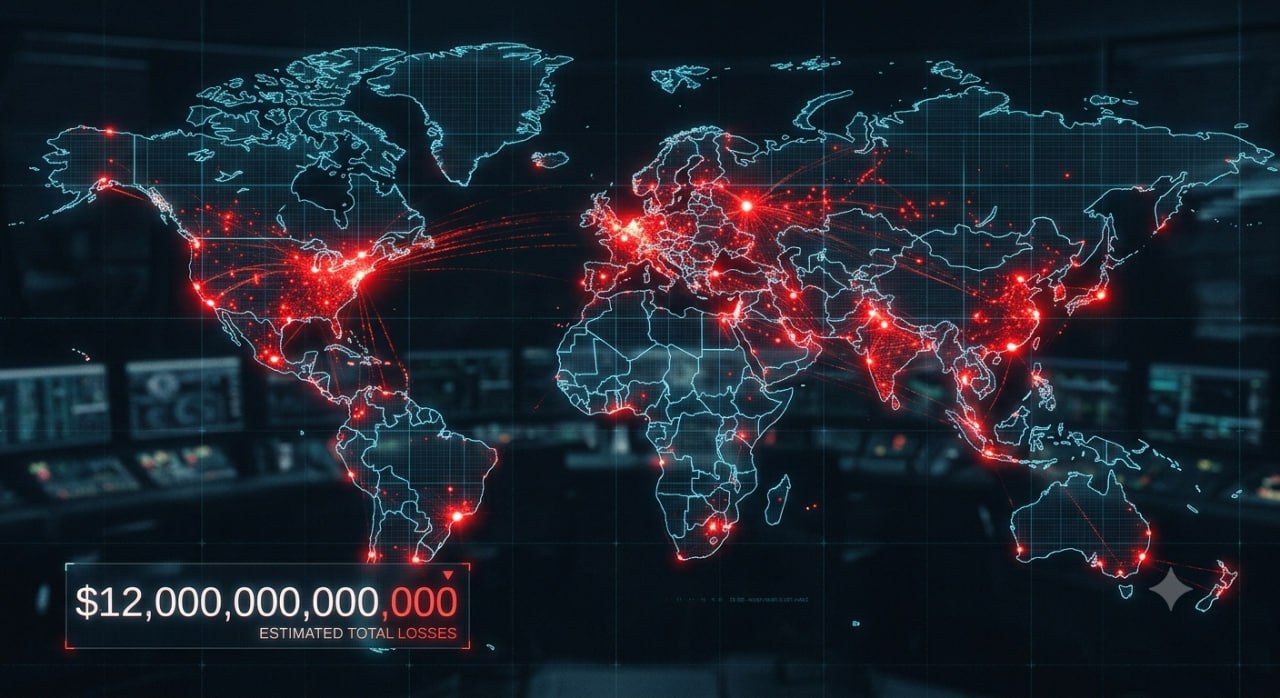
And the people losing that money aren't governments or giant corporations. It's people paying bills online, checking email, and logging into accounts they've used for years. People like you.
They're Not Hiding in a Basement. They're Running a Business.
Forget the lone hacker in a hoodie. Today's cybercriminals operate like tech companies — developers, analysts, and automated tools built to hit millions of targets at once.They don't need to fool everyone. They just need a small percentage to slip up. At that scale, even a 1% success rate is a goldmine.
Every Successful Attack Funds the Next One
Stolen money gets reinvested — into better tools, more convincing scams, smarter automation. It's a self-funding cycle, and it's accelerating.
You're Not Supposed to Win This Fight Alone
Cybercriminals work on this full-time. You don't — you've got a job, a family, a life. Trying to out-think an industry that never sleeps isn't a fair fight. That's the gap modern security software closes. Not just scanning for infected files — actively recognizing scam patterns, flagging dangerous sites, and stopping threats before you ever see them.
While You Were Living Your Life, TotalAV Was Watching the Door

Three decades of staying one step ahead while attackers got smarter. Millions of people now rely on tools built by teams whose entire job is watching for what's coming next. You don't need to become a security expert. You just need backup.